Explanation
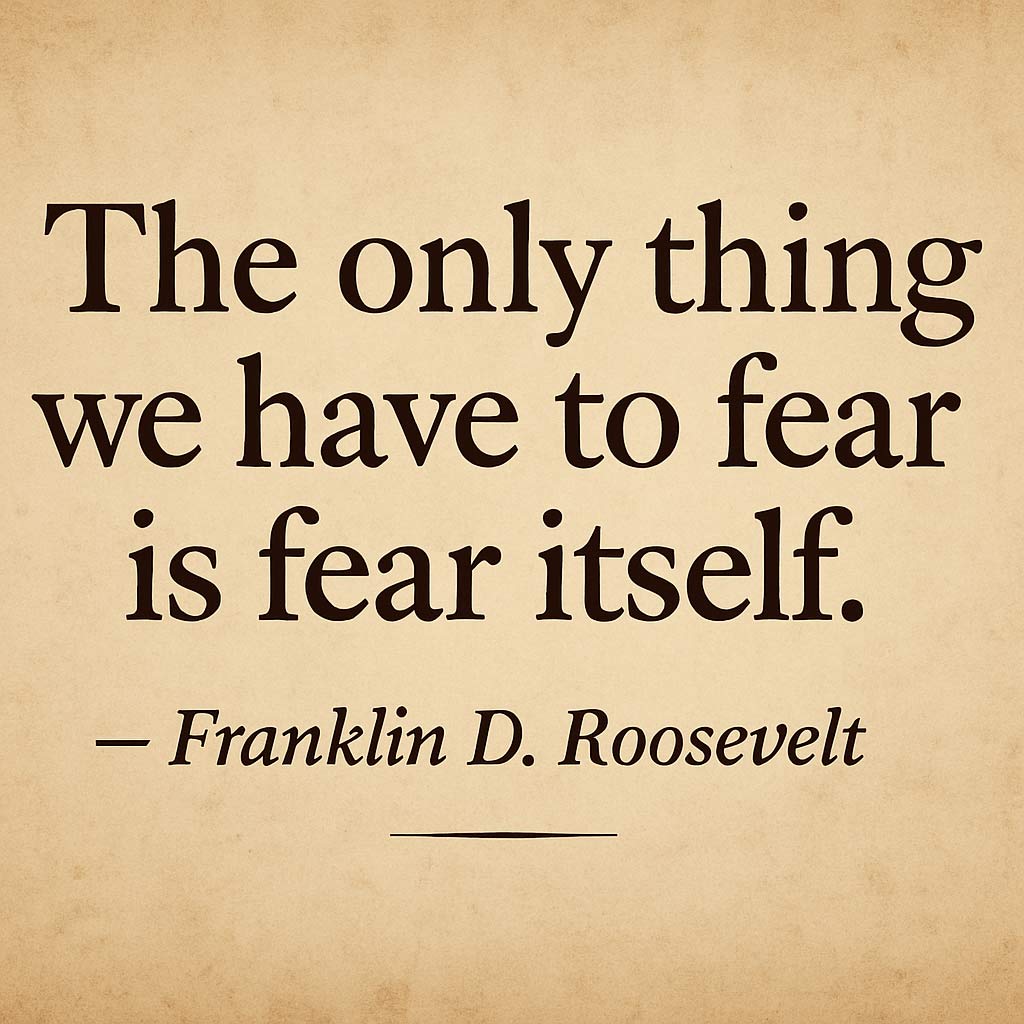
Roosevelt’s line means that the greatest obstacle in a crisis is not the material problem itself but the panic, doubt, and paralysis that fear creates. When people give in to that fear, they stop acting, which makes recovery harder; courage and steady action break the cycle. It’s a call to face uncertainty with clear heads and purposeful steps rather than surrendering to dread.
About the Author
Franklin Delano Roosevelt (January 30, 1882–April 12, 1945) was born into a prominent New York family, educated at Harvard, and—after being stricken with polio in 1921-developed the steely resolve and public warmth that defined his career. As the 32nd U.S. president (1933-1945) he won four terms, launched the New Deal (Social Security, bank reforms, massive job programs) and steadied the country through most of World War II. He’s most remembered for expanding the federal safety net, restoring public confidence with his famous "fireside chats," and reshaping modern American government. When he told the nation on March 4, 1933, that "the only thing we have to fear is fear itself," he was urging calm amid bank runs, mass unemployment and a crisis of public confidence at the depth of the Great Depression.